One ship, start to finish, on the record
In Bahrain, we bought a 160-metre container ship and had it taken apart at a certified yard, overseen by us and by regulators. KPMG audited the finances.
Why we did it
We wanted to show that an end-of-life ship can leave service the right way: without leaving its owner exposed, and with its steel going back into use. So we did it for real, with one vessel, from its owner's hands to new steel. One ship was the proof; the same process is designed to run on several vessels at once. We can run the whole chain again, from A to Z, or bring only the parts a site is missing. Our floating dry docks are designed around what we learned.
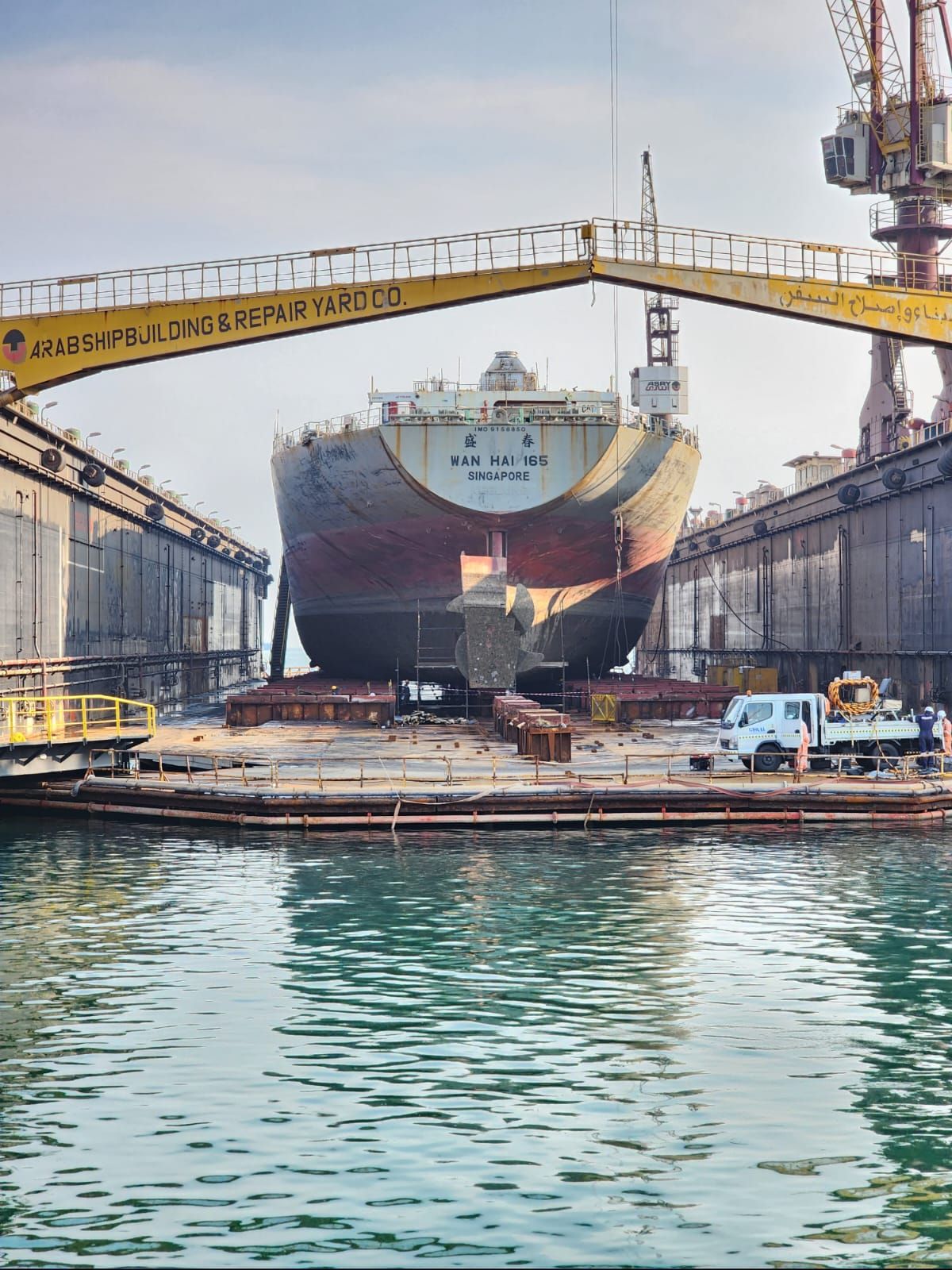
The ship came from a well-regarded owner with strong ESG commitments, through a competitive open tender. We chose Arab Shipbuilding and Repair Yard (ASRY) in Bahrain for its location and its ship recycling certification, and reviewed its Ship Recycling Facility Plan on site before work began.
How the ship changed hands
Sale
EEC Trading BV, in the Netherlands, bought Wan Hai 165 from its owner through an open tender.
title · EEC Trading BV
Title transfer
Ownership passed to EEC Trading Bahrain WLL, our company in Bahrain.
title · EEC Bahrain
Yard contract
EEC Trading Bahrain contracted ASRY, a certified yard, to take the vessel apart under EEC's oversight.
title · EEC Bahrain
Material returned
ASRY handed all recovered material back to EEC Trading Bahrain.
title · EEC Bahrain
Steel sold
EEC sold the material to steel mills in Taiwan, India and the UAE, by sea and land, to make new steel.
to · steel mills
How we de-Legoed it
Stripped afloat, in three planned stages.
About 2,845 t came off at the berth, from liquids to the machinery, with stability calculated for each stage.


Cut into seven blocks in a floating dry dock.
While still in the dock, the hull was cut into blocks of up to 990 t, which then moved onto the slipway.

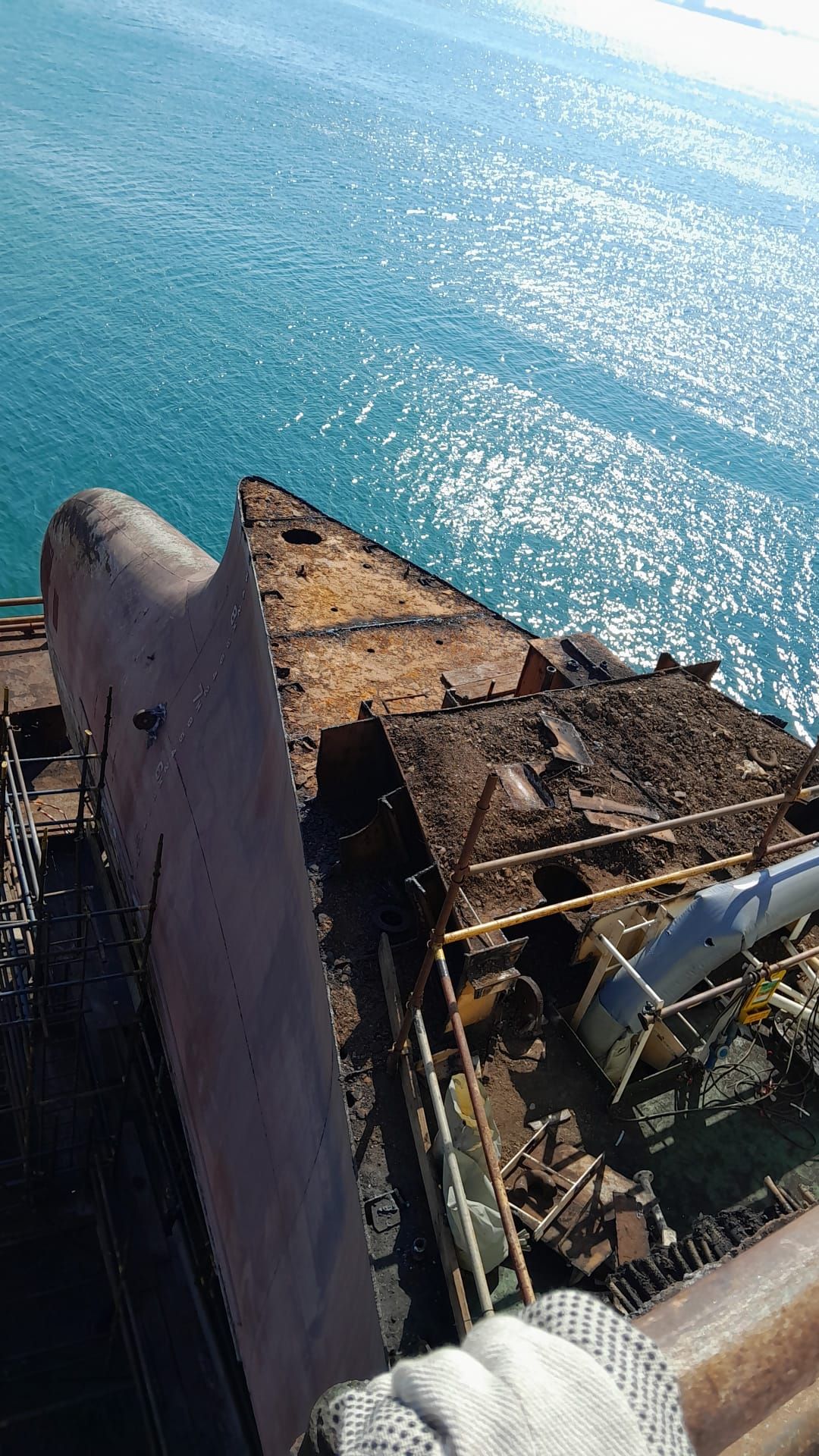
Sorted for a second life.
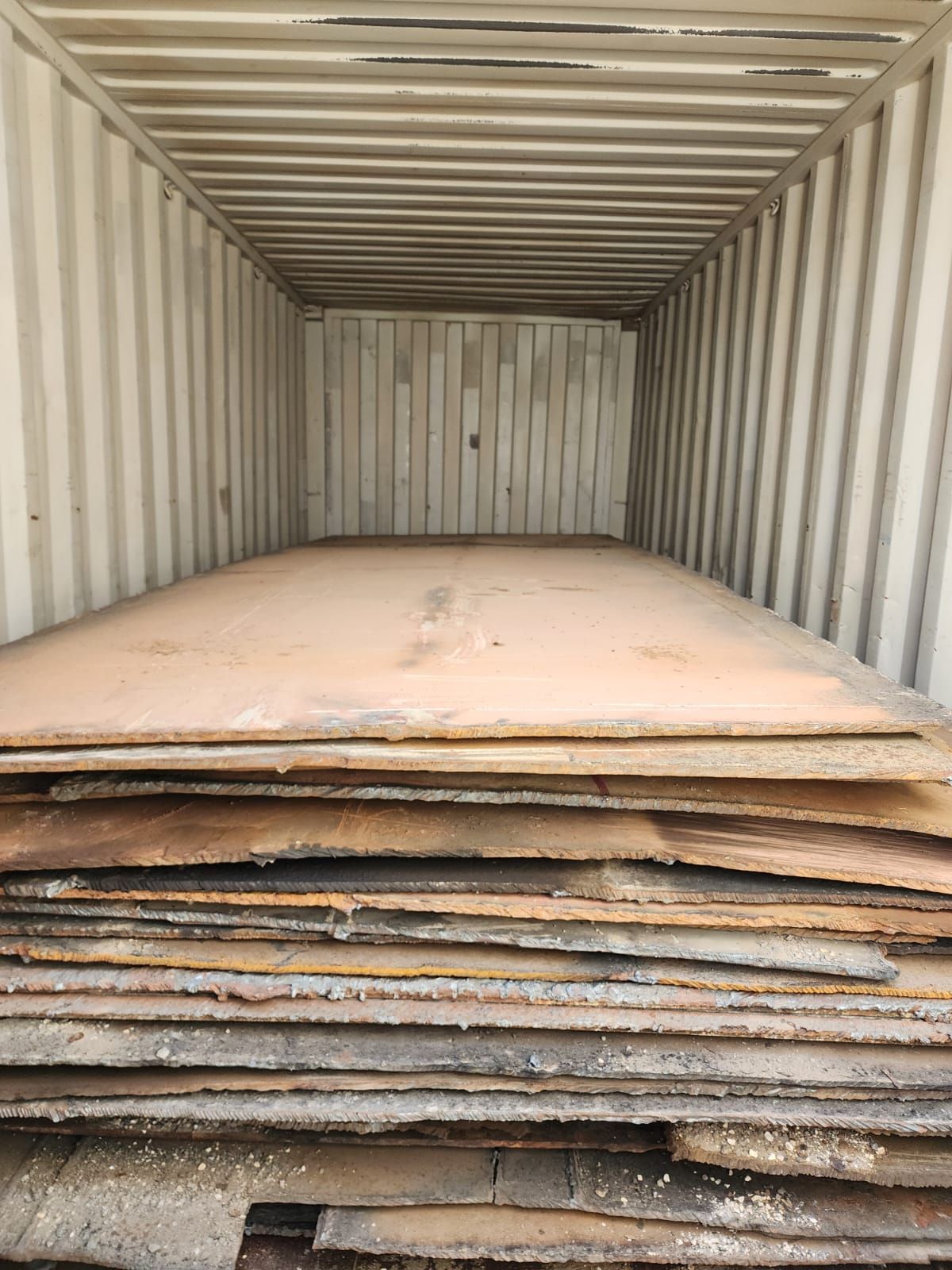
The blocks were cut down and sorted: plate kept intact for reuse, the rest as melting scrap for the mills.



Cut into seven blocks in a floating dry dock.
Blocks of up to 990 t were cut from the hull and moved onto the slipway.
- Container ship, Wan Hai 165160 m
- Stripped afloat, at the berth≈ 2,845 t
- Blocks, each up to 990 t7
- Financial audit of the pilotKPMG
Who was watching
- Regulatory authorities, who oversaw all operations
- Bahrain's Supreme Council for Environment, whose guidelines and supervision covered waste handling
- Authorised waste management vendors, who handled hazardous waste
- The original owner's safety representative, who monitored the work
- KPMG, which financially audited the project
The pilot in the press
Our first vessel drew coverage from general and trade media alike.
What we proved
- A structured, repeatable steel recovery process
- Work to the strictest standards, the EU and UAE Ship Recycling Regulations
- Lower environmental hazard, through legal waste management
- Better worker safety and wellbeing
- That the model is economically viable and can scale
- The full technical reportRead the report (opens in a new tab)
Every drawing and figure from the Wan Hai 165 pilot.
Your fleet could be next.
Tell us about the ships you plan to retire and we'll prepare a valuation and a plan for the regulations that apply.